
Serengeti Migration safari
The Great Wildebeest Migration
Tanzania’s renowned Serengeti National Park offers travelers an incredible experience on the Serengeti Migration Safari. This annual event, featuring millions of zebras, wildebeest, and other herbivores, is recognized as one of the largest wildlife migrations on the planet. The movement is driven by the animals’ quest for more fertile pastures and water sources, spanning vast geographical expanses.
While on this safari, guests witness an awe-inspiring display of nature’s grandeur, with herds of animals rushing across wide-open plains, traversing perilous rivers, and encountering formidable predators like lions and crocodiles. The Serengeti Migration Safari is a must-see for nature lovers and wildlife enthusiasts, offering a unique opportunity to observe the circle of life in the animal kingdom.
For those fortunate enough to embark on this remarkable safari journey, the pristine beauty of the Serengeti, combined with the breathtaking spectacle of the migration, creates an unforgettable experience.
Why do wildebeest migrate?
The wildebeest migration is a spectacular and crucial survival strategy driven by the search for water and fresh grazing pastures. This annual migration, taking place primarily within the Serengeti ecosystem, is dictated by the seasonal rainfall patterns that influence grass growth. As the dry season progresses and available grass depletes, wildebeests move to areas where recent rains have nurtured lush vegetation, ensuring a continuous supply of food and water.
This cyclical movement is essential for their survival, as it ensures that the wildebeests have access to necessary resources throughout the year. The migration aligns with the different stages of their reproductive and calving cycles, providing the necessary sustenance during these critical periods. Moreover, this pattern of movement helps prevent overcrowding and overgrazing in any single location, allowing the ecosystems they traverse to recover and regenerate, thus maintaining a balance within the environment.
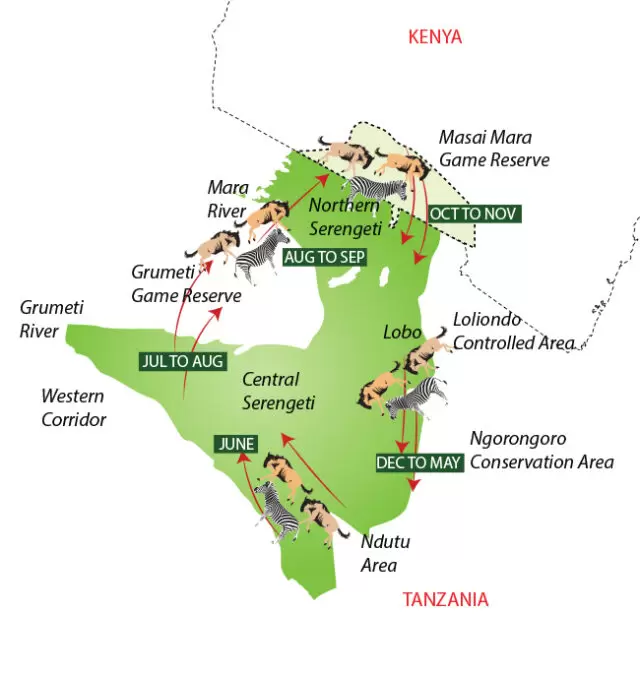
Tanzania Migration Seasons
DECEMBER – APRIL
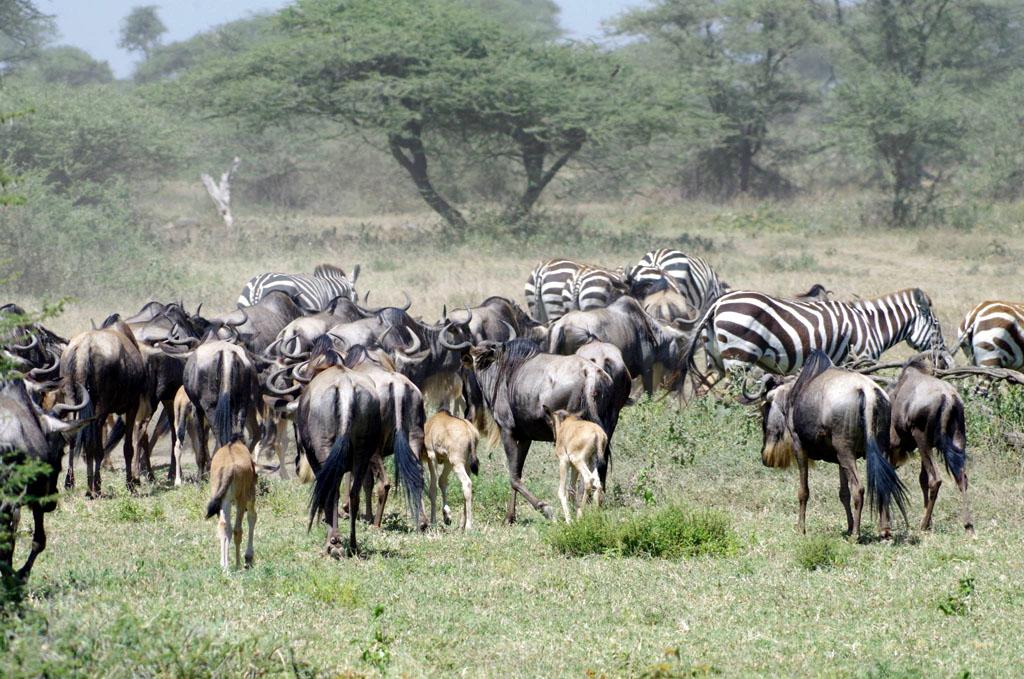
We can find the main calving grounds in the area southeast of Seronera: typical Serengeti plains stretch all the way to the Ndutu area near Ngorongoro. Triggering their move to this area are the short rains in November and December. The wildebeest stick around this area until the end of the long rains, end of April, early May. The delightful news is that this section of Serengeti National Park is easily accessible and that in this period the landscape becomes lush.
February is usually calving season in the Ndutu area and the southeastern plains: the very best time to visit this area. As wildebeest, zebra and other ungulates are so many, and give birth to so many calves, the spectacle works as a magnet for predators. As early as March or April the herd may move again in search of greener pastures. Seeing the actual migration in this period is more difficult, but chances are that you will encounter very large herds on the move.
MAY – JULY
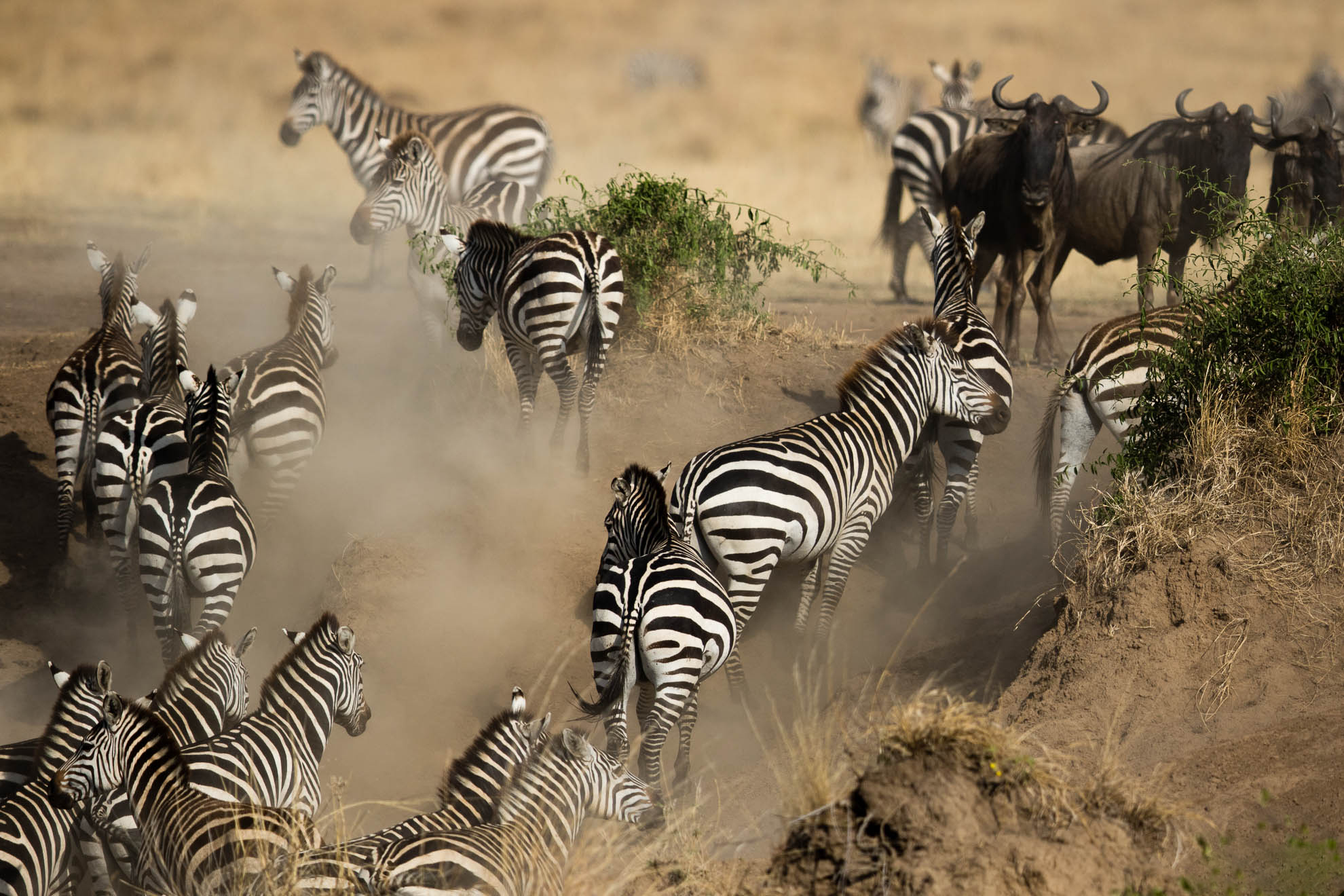
This is the period that the wildebeest, after having feasted on the short green grasses of the southeastern Serengeti and after having giving birth to their offspring, start getting ready for their 800-kilometer-long trek. The actual starting date may be anytime between late April and early June. This is the time to you may have the privilege to see one of the greatest natural phenomena in the world: more than a million marching animals in a column up to 40 kilometers long.
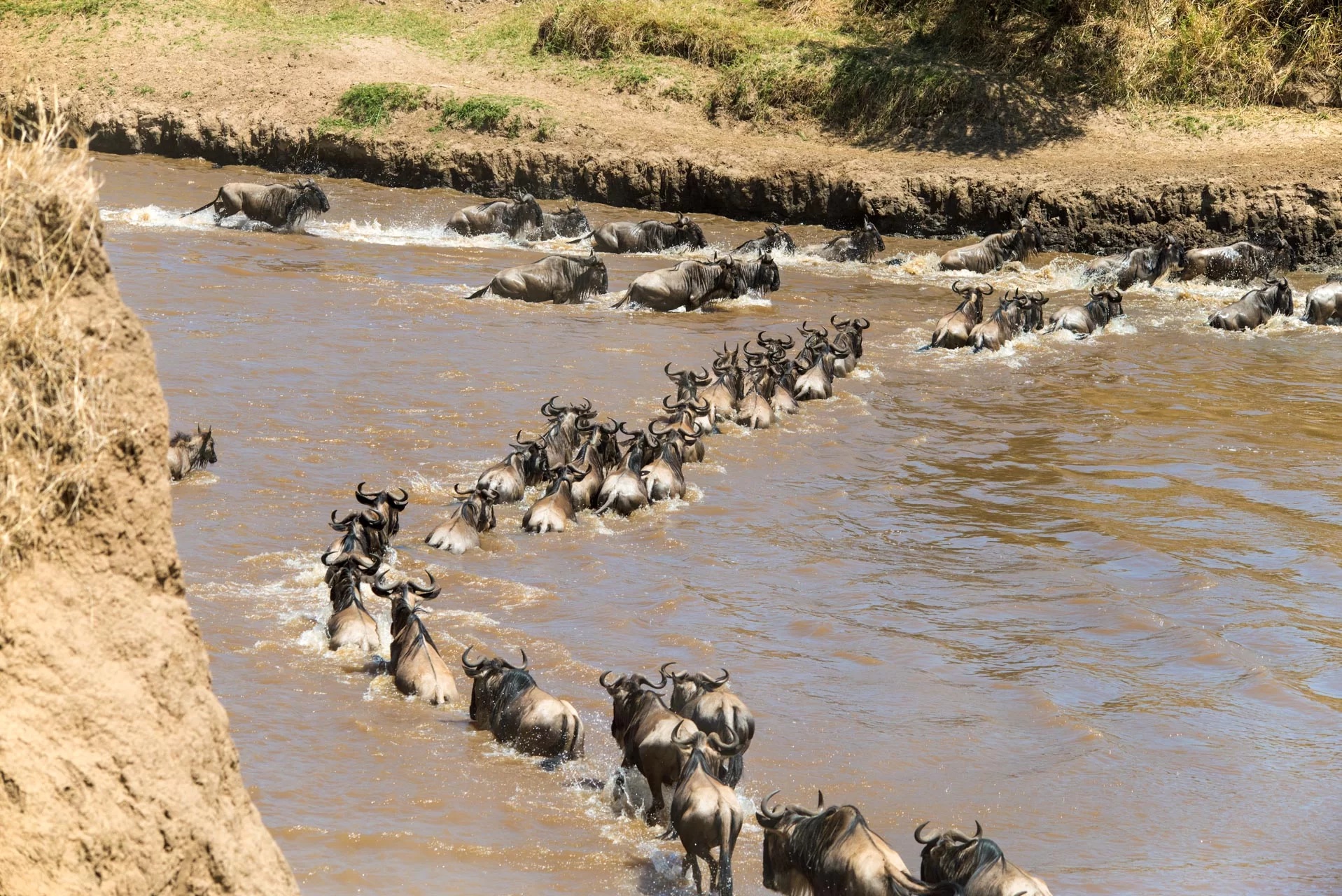
During the migration, the herd will move towards the Western Corridor, where they will face the first major obstacle: crossing the Grumeti River. Many animals don’t survive the crossing as they are being awaited by the area’s population of oversized crocodiles ready to feast. The herd may congregate on the southern bank of the river and stay there for up to two weeks before crossing the river.
AUGUST – SEPTEMBER
When the Grumeti River obstacle has been taken, the herd moves further north and starts crossing the next big hurdle, the Mara River, in July or August. The Mara River crossing is where so many iconic Great Migration photos have been taken. After this crossing the herd flocks to the northwest plains and Masai Mara National Reserve in Kenya. The August – September period is considered being a bad time to visit Serengeti National Park and see the Great Migration as the herd moves into the Masai Mara in Kenya.
However, migration patterns show that about half of the herd stays on the Tanzanian side, in the Mara Serengeti area. In this period, smaller herds of wildebeest (well consider small… herds may count up to between 500 and thousands of individuals) frequently cross the Mara River, back and forth, for no apparent reason. This is an excellent time to stay at one of the Serengeti Mara camps.
OCTOBER – NOVEMBER
Crossing the Mara River northbound means that, at one point, the herd needs to cross the river one more time before commencing the trek back in a southerly direction. This usually happens in October, but sometimes earlier. In this period the herd will cross the northern plains and Lobo area. This section of Serengeti National Park is little-visited, so if you are looking to see the migration in relative quietness, this would be the time. The wildebeest return to the short- grass plains and calving ground around Ndutu in late November. And from here, the Great Migration starts all over again.
Testimonials
What our Travelers are saying
Posted onVerified Unforgettable Safari Experience with Afriswahili Adventure! Unforgettable Safari Experience with Afriswahili Adventure!I recently had the absolute pleasure of going on a safari with Afriswahili Adventure, and I can confidently say it was the trip of a lifetime! From the very beginning, the team was professional, attentive, and passionate about creating an authentic and unforgettable African experience.Our guide was incredibly knowledgeable—not just about the Big Five, but also about the culture, history, and landscapes of every region we visited. He had an amazing eye for spotting wildlife and made sure we didn’t miss a moment, whether it was a pride of lions lounging in the grass or a herd of elephants crossing the savannah at sunrise.The accommodations were thoughtfully selected—comfortable, clean, and perfectly situated in stunning natural surroundings. Every detail was handled smoothly, from transportation to meals, and we always felt safe, informed, and well taken care of.What really stood out was how Afriswahili Adventure goes beyond the typical tourist experience. They’re deeply rooted in the local community, and it shows in the genuine, respectful way they engage with both the land and the people. You don’t just see Africa—you feel it.If you’re looking for a safari that combines adventure, authenticity, and heart, look no further. Afriswahili Adventure delivers an experience that will stay with you forever.Posted onVerified Amazing trip of my life My heart still beats to the rhythm of the African bush. The vast landscapes of Tanzania unfolded like a dream, each sunrise painting a new masterpiece. Witnessing the gentle giants roam free, the playful energy of the wildlife, and the quiet majesty of nature's raw beauty filled me with a profound sense of peace. It was more than just a trip; it was a deeply moving connection to something ancient and wild, a warmth that lingers long after the dust has settled. An unforgettable journey for the soul. I am very glad to choose Afriswahili Adventures for this amaizing experience.Posted onVerified Amazing Service Kudos to AfriSwahili Adventures. I've had a great pick up and tour around Kilimanjaro. Ii highly recommend them for your Safari Toura and Mount Climbing guidance.Posted onVerified To let others know that they will never regrets to theire choice Bayona he is available best smilling guide,honest and guiding with integrity,I had a wonderful experience with him during our trek to Mount Kilimanjaro he made us to fulfill our dream ,I recommended Bayona for anyone who looking for the best guide.,He is always take the time to answer any questions he is very knowledgeable.Posted onVerified Afriswahili hakuna matata Everybody dreams of having an adventure. An adventure to remember their entire life. Today I am here to share with you one such adventure of mine. A Beautiful Giant 5895amsl free standing mountain over 6 days lemosho route.“It is not the mountain we conquer but ourselves.” Godliving Bayona, the best kilimanjaro mountain guide famously said. This is what mountain teaches us. We might seem like a puny ant in front of it but we can still dream to reach the top, however, far it might seem. It is this self-belief of reaching the top despite the insurmountable odds that makes mountains so special for me.An adventure is never complete without a partner in crime. I didn’t had 1 but 3. Three complete strangers from different parts of India whom I can now count as my dear friends. We not only hiked together but we shared our pains and happiness alike. This was one of the highest moments of this trip that I made 4 great friends for life. Happy hike Afriswahili hakuna matata😊Posted onVerified TANZANIAN EXPERIENCE I am simply amazed by the beautiful works of nature. The experience I got was wonderful, thanks to my tour guide, Mr Godliving, he is really well experienced and a great company, I highly recommend Afriswahili AdventuresPosted onVerified Wonderful trekking experience! Godlving Bayona was an excellent guide! He was well informed and good company. The food was great, everyone was friendly and helpful!Posted onVerified Nature at it's best It's was indeed a once in a lifetime adventure, an astonishing and must-see experience. Highly recommended for a strong family bonding. Very friendly tour guiders extending their love for nature through their expertise. Don't hesitate to give yourself this experience.Cheers🥂